

How to Come Home to a Body That's Under Attack
A six-part series on Romani dance tradition as a navigation curriculum for conditions of collapse

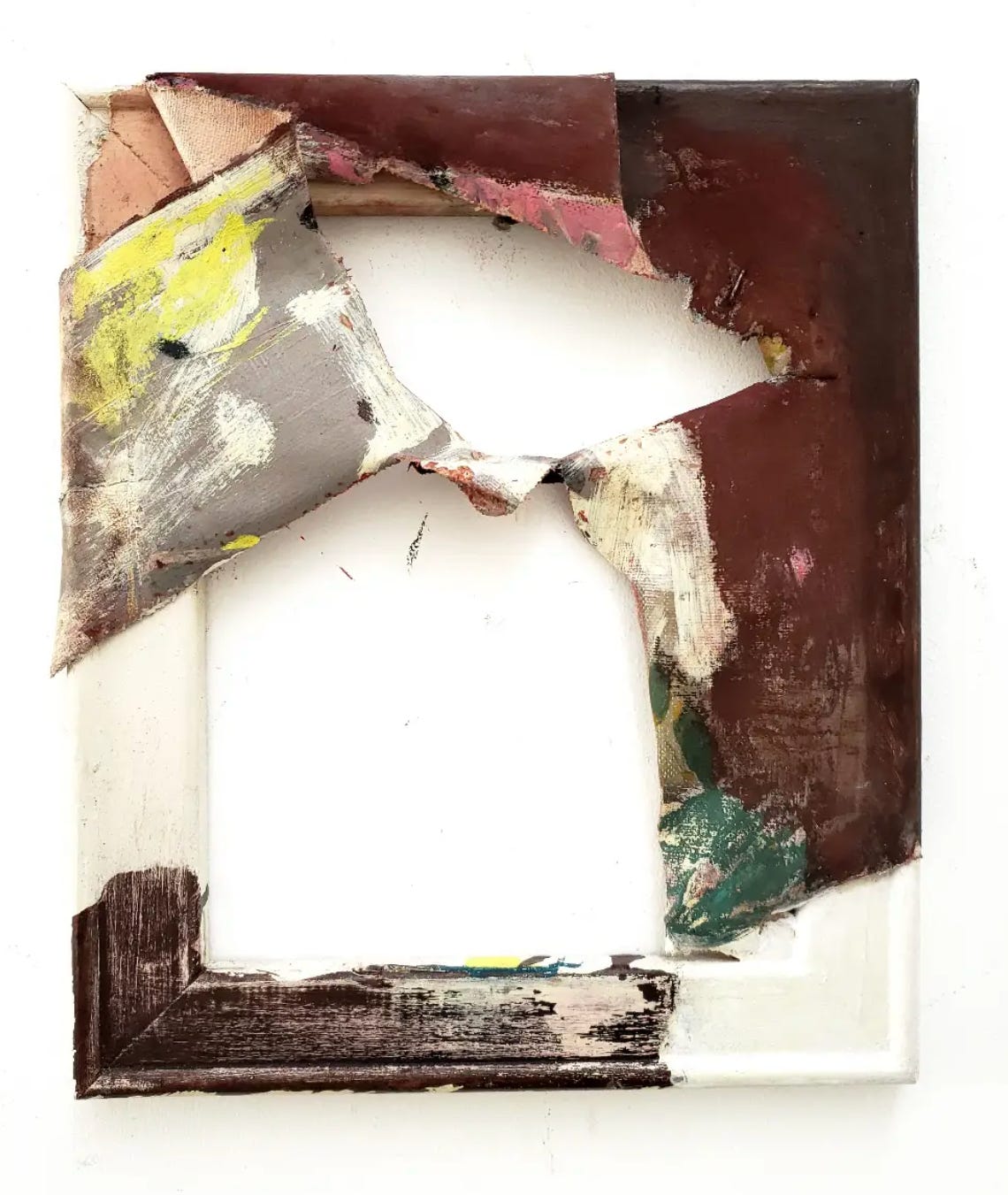
We keep hearing embodied teachers, psychologists and healers telling us to down-regulate. Come home to the body. Settle. Dancers and lineage carriers demonstrate the power of community and the importance of respect and ritual with the land.
But what if home is under attack? What if the body you’ve trained so carefully still does things it doesn’t know it shouldn’t be doing? And what if, right now, there is no community to return to? What if what is really needed is movement towards a way out?
I am not suggesting that these questions point to some sort of personal failure, or that any of us need more retreats to process things. I’m saying that most somatic and embodied modalities available teach people how to live in a world that is safer than the one we are in. I am saying most communal and land-based practices are in fact specific to those places and those people—and in many cases are closed practices and at best we were only guests when we visited them.
The signs of teachings falling short for well-meaning teachers, healers and beginners are everywhere. You see the burnout on peoples faces. You have seen—many times at this point—the fallout when someone finds out something that healed them wasn’t meant for them to keep. Or you might know the experience of laying down in comfortable clothes, feeling the singing bowls wash over you and the promise that a little more self-awareness and regulation will bring safety when in fact your body is collecting different data. Your body says danger while the wellness industry says settle.
How then do we embody in a world that won’t admit it’s at war?
As someone raised within a tradition built for survival and finding ways out of impossible situations, I know this struggle from the inside, and from much further back than my own life. I’m a Bashaldo Gypsy, raised with a legacy of five-hundred years of American Gypsy culture—a dancer, harper and researcher with a PhD in impact-driven dance. My family knows all about being told that we are safe while in fact, our homes, culture and lives are under constant attack that is invisible to outsiders.
What my people built inside this crack—as Roma and Sinti people have for thousands of years—is a movement technology for staying mobile and alive at the same time. This is not hyper-vigilance, which will burn the nervous system down and lock up the fascia and lymphs. This isn’t down-regulation either, which—I am going to borrow from my mother here—is like leaving your ass open in the breeze. Sure, it’s liberating and good to know, but it is also an incomplete instruction.
What I am sharing with you in this six-part series is a distillation through rigorous research that came to me when I opened to the Blackness of the Atlantic ocean and the lives of sailors.1 They led me home to my own culture and identity—that which I had thought was cursed. During my PhD at the University of Limerick, I confirmed this impact-driven knowledge carried by Roma and Sinti people and adapted around the world, including in many percussive dance styles.2 The methods behind the forms are what I offer to you—to gadje (non-Roma). While many Roma and Sinti communities remain closed, my people have always showed you how to read through the roads of time, how to dance alone on a stage while still finding community in that, made songs to mourn the innocence of being human. Through our ingenuity we helped teach the world to navigate: the trained capacity to perceive danger accurately, move in relation to it, and keep dancing through the fullness of being alive.
I’m not saying that you need to stay traumatized. I’m not saying that polyvagal people are wrong or that poetic embodied teachers are lying to you. Landing in the body and understanding what a healthy balanced, regulated body is for you is wonderful tech. But for many of us it’s only half a curriculum.
Human rights law teaches us that everyone has a right to a safe home—but what happens when the ground of that home is shaking, or has fallen away entirely? That’s the half my tradition are experts at moving through, and the half of the curriculum that has saved my life many times. This is the magic that has always allowed me to survive, thrive when I can and stand in social responsibility to others, even during this last year when disaster took my life in New York City away from me. This is choreography that welcomes calmness but does not depend upon it to cross an ocean onto safer ground.
I’m inviting you to consider that life is full of impact, and we could even say it is led by it. Collisions great and small are how we come to know the world and ourselves better, or perhaps at all.
Choreonavigating Crisis is a six-part series on movement in times of collapse, the first in the Timedancing Lab. Here are the lessons we will meet in perception and motion:
Occupied: recognize when your time, attention, space, and body have been moved into; witness being watched without freezing while embodying your values.
Privacy as Power: choose your own legibility; make concealment a practice instead of a fear.
The Exit: leaving as choreography—timing, direction, what you carry, wayfinding through fear.
Impact: force literacy from my doctoral research: receive impact without shattering, transform it with rhythm.
Timespinning: take up a broken tradition and dance it forward; build destiny instead of inheriting fate.
Kumpanija: your traveling company: how to be a guest, forage shared nourishment, restore space and relation after collapse.
Here, somatic self-soothing is welcome, but let it come from your own living tradition, not a borrowed one. My instruction for you comes with lineage attached, and I’ll help you find and deepen yours.
The first lesson publishes Sunday, June 21, here in the Lab. Every step is available to you with a paid subscription, and founders receive the live course starting on June 30th.
I’ll see you at the fire.
Russell
The Details
Self-paced lessons. Six weekly lessons published here in the Timedancing Lab, beginning Sunday, June 21. Included in full with a paid subscription: $6/month or $55/year.
Live online sessions. Six companion sessions that guide you into the movement, Tuesdays 8pm CEST (7pm Ireland · 2pm ET · 11am PT), June 30 through Aug 4. $90 for all six (six months of the Lab included for free), or $20 drop-in if space allows.
Founding members $130. A full year of the Lab plus all six live sessions.
No dance experience required. If you have a body, a chair and you’d like to figure out what to do next with it, that’s all that is required. Fill your summer with movement. I’ll be here cheering you on.
The research for this class is grounded in my chapter, “‘This Little Wooden World’: Choreo-navigating Maritime Dance” in The Body Questions: Celebrating Flamenco’s Tangled Roots, edited by K. Meira Goldberg and Antoni Pizà. Read a sample available here by Cambridge Scholars Publishing.
My dissertation on impact-driven dance is available here for purchase.