
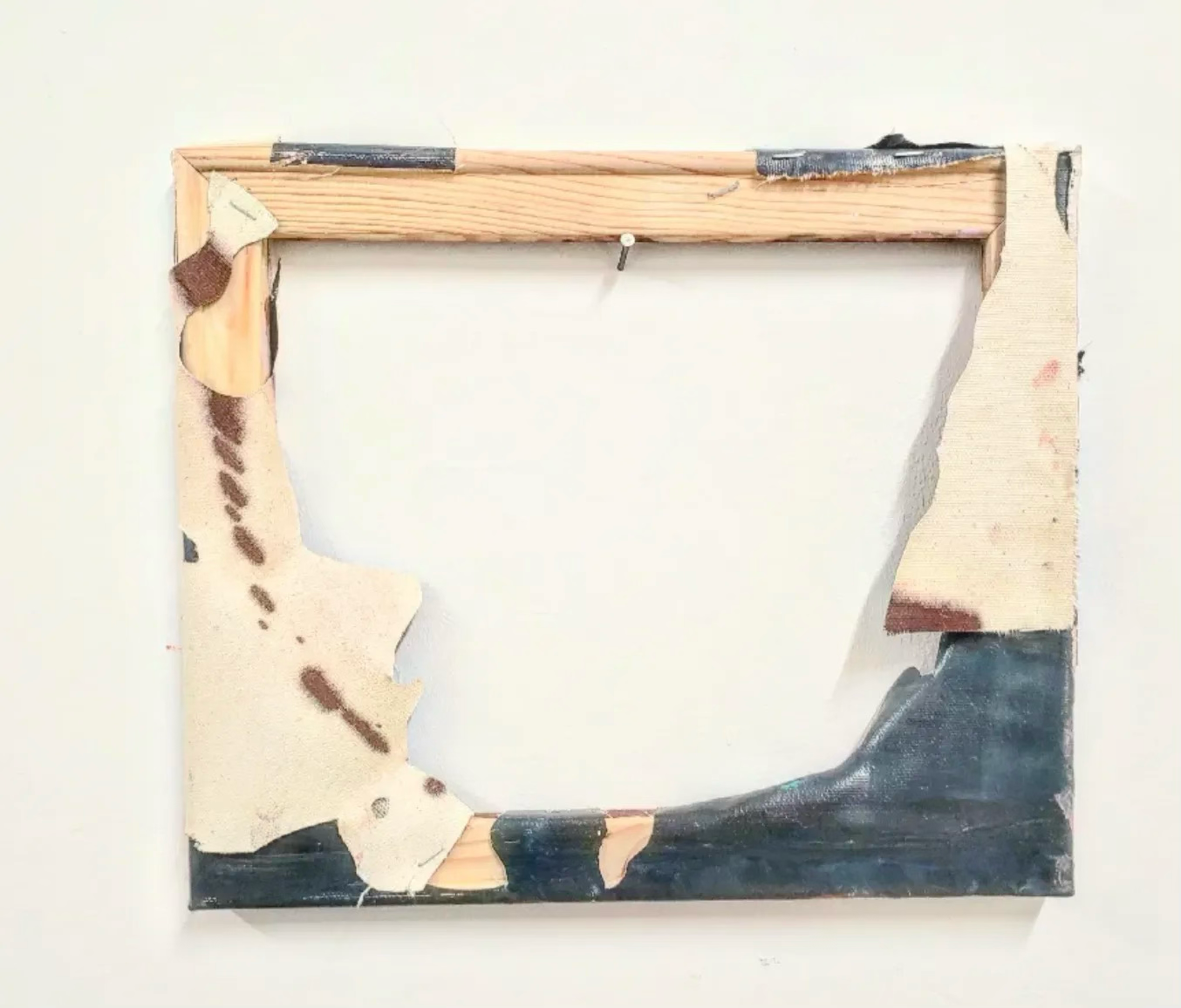
We keep hearing embodied teachers, psychologists and healers telling us to down-regulate. Come home to the body. Settle. Meanwhile, dancers and lineage carriers demonstrate the power of community and the importance of respect and ritual with the land.
But what if home is under attack? What if the body you’ve trained so carefully still does things it doesn’t know it shouldn’t be doing? And what if, right now, there is no community to return to? What if what is really needed is movement towards a way out?
I am not suggesting that these questions point to some sort of personal failure, or that any of us need more retreats to process things. I’m saying that most somatic and embodied modalities available teach people how to live in a world that is safer than the one we are in. I am saying most communal and land-based practices are in fact specific to those places and those people—and in many cases are closed practices and at best we were only guests when we visit them.
The signs of teachings falling short for well-meaning teachers, healers and beginners are everywhere. You see the burnout on peoples faces. You have seen—many times at this point—the fallout when someone finds out something that healed them wasn’t meant for them to keep. Or you might know the experience of laying down in comfortable clothes, feeling the singing bowls wash over you and the promise that a little more self-awareness and regulation will bring safety when in fact your body is collecting different data. Your body says danger while the wellness industry says settle.
How then do we embody in a world that won’t admit it’s at war?
As someone raised within a tradition built for survival and finding ways out of impossible situations, I know this struggle from the inside, and from much further back than my own life. I’m a Bashaldo Gypsy, raised with a legacy of five-hundred years of American Gypsy culture—a dancer, harper and researcher with a PhD in impact-driven dance. My family knows all about being told that we are safe while in fact, our homes, culture and lives are under constant attack that is invisible to outsiders.
What my people built inside this crack—as Roma and Sinti people have for thousands of years—is a movement technology for staying mobile and at rest at the same time. This is not hyper-vigilance, which will burn the nervous system down and lock up the fascia and lymphs. This isn’t down-regulation or relaxation either, which—I am going to borrow from my mother here—is like leaving your ass open in the breeze. Sure, it’s liberating and good to know, but it’s an incomplete instruction when you’re facing hardship or danger whether it’s perceived or real.
What I am sharing with you in this six-part series is a distillation through rigorous research that came to me when I opened to the Blackness of the Atlantic ocean and the lives of sailors.1 They led me home to my own culture and identity—that which I had thought was cursed. During my PhD at the University of Limerick, I confirmed this impact-driven knowledge was carried by Roma and Sinti people and adapted around the world, including in many percussive dance styles.2 The methods behind the forms are what I offer to you—to gadje (non-Roma).
While many Roma and Sinti communities remain closed, my people have always taught how to read through the roads of time, how to dance alone on stage while still finding community in that and made songs to mourn the innocence of being human in an inhuman world. We taught people how to survive. Through our ingenuity we helped teach the world to navigate: the trained capacity to perceive danger accurately, move in relation to it and keep dancing through the fullness of being alive.
I’m not saying that you need to stay traumatized. I’m not saying that polyvagal people are wrong—although this theory has recently been disproven—or that poetic embodied teachers are lying to you. Landing in the body and understanding what a healthy balanced, regulated body is for you is wonderful tech. But for many of us it’s only half a curriculum.
Human rights law teaches us that everyone has a right to a safe home—but what happens when the ground of that home is shaking, or has fallen away entirely? That’s the half my tradition are experts at moving through, and the half of the curriculum that has saved my life many times. This is the magic that has allowed me to survive, thrive when I can and stand in social responsibility to others, even during this last year when disaster took my life in New York City away from me. This is choreography that welcomes calmness but does not depend upon it to cross an ocean onto safer ground.
I’m inviting you to consider that life is full of impact, and we could even say it is led by it. Collisions great and small are how we come to know the world and ourselves better, or perhaps at all.
Choreonavigating Crisis is a six-part series on movement in times of collapse, the first in the Timedancing Lab. Here are the lessons we will meet in perception and motion:
Occupied: recognize when your time, attention, space, and body have been moved into; witness being watched without freezing while embodying your values.
Privacy as Power: choose your own legibility; make concealment a practice instead of a fear.
The Exit: leaving as choreography—timing, direction, what you carry, wayfinding through fear.
Impact: force literacy from my doctoral research. Receive impact without shattering, transform it with rhythm.
Timespinning: take up a broken tradition and dance it forward; build destiny instead of inheriting fate.
Kumpanija: your traveling company. H ow to be a guest, forage shared nourishment, restore space and relation after collapse.
Here, somatic self-soothing is welcome, but let it come from your own living tradition, not a borrowed one. My instruction for you comes with a lineage attached, and I’ll help you find and deepen yours.
Lesson One: Occupied
My teaching is a simple one: when you feel no hope, move with your humanity. If you have done all the manifestation spells, built up your power, designed a creative practice, embodied peace and then still felt no relief—this six-part series is for you.
If you’re feeling pretty hopeless, that’s a sign of readiness. If things haven’t worked out, that’s a meaingiful opening. If you’ve considered giving up the fight, whether it’s in rage, terror, self-pity or catastrophic grief, I invite you to be still for a moment. And then let that be the beginning of a creative journey to understand who you really are.
My message of art in peril is also, I believe, the only thing I can really offer up from the enormous, diverse Roma and Sinti world that I belong to and not betray my own people as so many have done before. Our arts are famous for their resilience in the face of thousands of years of slavery, genocide, displacement, theft and erasure spanning continents, and I report that knowledge in my Tuesday letters from Gypsy Fires.
Let me explain here what I mean when I say I am a Fortune Teller. There is the stereotype of the Gypsy Fortune Teller with her cards for reading, crystal ball and her caravan, which I think most people have some familiarity with. I won’t go into a full history here of that tradition, the profession and all its imitators. For me I am arguing the same thing I did in my PhD when I spoke about psychometry, or, the art of touching an object and perceiving its history. I am not referring to some mystical ability. I am referring to the right we have as living, moving beings to know the world when we touch it, and it touches us.
This is the right for people, places and things to be more than just something to be counted, assessed and extracted. This can be a person sitting in front of you asking you to read them, or an object that you are given in order to sense its history. More commonly for me growing up it was situations and the people in them that needed reading not only for safety, but for the truth. I don’t think I have to tell you this, but our world is full of people who are not what they seem, and we have understood this as Gypsies for thousands of years.
In the context of the Timedancing Lab and this six-part series, Fortune Telling refers to the ability to feel time itself. In its fullest sense, I mean that we have some sort of natural ability to feel this time in all times, and all times in this time. Don’t worry if this isn’t quite making sense, we’ll come back to it later.
As we come to know each other better I can share that I have certainly lived hopelessness. The unconditional surrender it takes to continue tradition in the face of impossible circumstances is a stern, unforgiving teacher. I’ve come back from the abyss to help those that are ready to explore it, find what’s there, come back and show us what was found. This series is not intended as a replacement for any form of crisis support or intervention that you may need. As we’ll cover in the last course in this series, Kumpanija, there is a time to seek help, and I encourage you to get help if you need it and to help others when you can.
My offering here is one of artistic self-inquiry that allows us to open to the truth of who we all are. I promise you, if you are willing to simply let go—even just for a moment—on the other side is something more beautiful than you could ever imagine. And we’re all waiting to receive it.
Let’s begin.
Reading Occupation
Whenever I give a reading, I can usually tell how occupied someone is by how far back they remember. Did they remember what happened yesterday, or has their attention already been directed elsewhere? Did they remember what happened last season, last year or last decade, and did they notice what was changed and by whom? Did their parents remember what happened, and did they have the knowledge, time and ability to teach that to the next generation? What did their forbears forget, and what did they want their descendants to know, if anything? When reading history, do they know where at least some of their people were and what they did? Or were they taught in school or at a public monument to go back in time and memorize only certain people, places and events? Do they remember that we move as nature itself, or, as a Palestinian friend and colleague said to me last month, are they just a number?
You’ve most likely heard people talking about colonization and how we need to decolonize, and yes, that is one way of thinking about what I’m talking about. In this course we’re going to set that word aside in favor of something that is more choreographic—that is, I want us to use a word that is less abstract or policy-driven. My language, Romungró, is rich in words that explain what we are embodying—whether good or bad—and that approach forms my approach here in English. We want to learn to use words that don’t get us lost in our heads but instead, deepen and expand awareness with what’s actually happening inside and around ourselves.
So, we will work with the experience of being occupied so that we can understand what occupation is, what it does and how to release through it. I define the process of “reading” as one of understanding how the sitter (the person before you that you are providing a service for) is themselves occupied and therefore unable to maintain their own self-awareness of what has happened, what is happening and what will happen. That’s it. That’s all I’m doing.
In the most challenging of readings, the sitter before me has little awareness of what they are feeling, where their road in life is going and who might be available to walk with them on that journey from realms of time beyond ours. What is there instead most often is a seeker hungry for energy as they believe more power, knowledge and insight will get them what they want. I’m not judging this as bad, but it is very human.
The easiest of readings is when I am simply a mirror for the brilliant, awakened soul that has come to be seen fully. Here, the spirit world draws effortlessly close, the hunches are all already there welcoming my confirmation and the joy in simply being alive is inescapable.
In order to see the divine and the unseen occupations of the world however, you must learn over years how to perceive it inside yourself. This is often the hardest work, but it is the most worthwhile. It takes decades to begin mastery, generations to accumulate knowledge and entire civilizations sometimes to learn what to do and what not to do. If you don’t have that kind of insight, do not worry. It is often those who have most deprived of their own sense of truth, their sight, that can awaken in the most profound ways the world has not yet before witnessed. My instruction here is especially for those “hopeless” cases.
As one of my mentors—the late and world-renowned medium Mavis Pittilla—would say, “this is your birthright” because “you are a child of the universe.” We are not only wired to see the truth before and inside us; it is where we all come from. As so many sages from around the world have said through the ages, it is who we are.
I am not bringing this knowledge here so that you can one day hang a shingle and offer paid psychic readings. I’m bringing it here because the journey of psychic development is one of building self-awareness. We can only see into others and love them as much as we see into ourselves and reveal the unconditional love often hidden within that.
To build this practice of what many call paranormal awareness and allow it inform our perception as artists however, we need to make some adjustments. Most programs on fortune telling, whether they be psychic, mediumistic, witchy or divinatory, will teach you to build up your power. They can take the form of rituals, mantras, exercises or spells designed to help you have the necessary power to do what many call spiritual work. You may be familiar with these approaches, and I have certainly learned them.
I don’t have a problem with them, and I know from experience that for the power hungry, it wouldn’t make a difference to them if I did. In their most extreme occult sense, you can learn more about these beliefs and practices by studying many closed and secret societies, such as those found and released this year in a large report by the US American FBI into human trafficking, secret influence and ritualized power. I will leave that up to you to decide if that’s the path you’d like to walk down, but it does have nothing to do with what I am about to teach you. Again, this is a journey for those looking to let go of all that expectation and hoping that things will work out just right the way that is wanted. It is the journey of what I will call the true artist, the one who sees what is actually happening around them—and remembers a way through it.
I will summarize it quickly here because I know your time is precious, and it might be helpful to know what’s waiting for you ahead in the next section. If you are academically-oriented, my position on developing intuition also happens to be the most defensible position I know to take on the suspicious topic of the paranormal:
If you are looking to open your awareness, from the spiritual to the embodied to the creative to the mindful, the secret is not in taking up more space or having more power. It’s in opening our perception of time.
In the many practices I will share with you designed to help you surrender to your creativity and let go of all the expectations and occupations holding you back, the quickest shortcut I can offer you is to build your awareness of time—and all the rest will unfold for you in ways no one could predict because it is your consciousness itself that is meeting the world and doing the deepest magic we can do as embodied creatures: perceiving and creating new realities.
A Manifesto for Timedancing
For as long as we can remember, we have been timedancers. In dreams, in the eyes of a stranger, across murdered ground and rested universe—through clock, compass and wheel—we spin. At other times we seem to twist time right back. In some moments, we whirl together.
In our journeys across the earth, we have come to account for crossings. Some care more for beginnings, some for departure and others for their finding. As the number of witnesses of this wayfaring has grown, so too have our ways of keeping track of where we have been, where we are, and where we might want to go. Some map hope, and others wanting—a hunger with no shore.
The ruins of borders, however, teach few throughout the ages. Our celestial orb, our continents, our homelands, our houses and our bodies are moving. These edges—our names, identities and boundaries—are so fiercely protected, but they can never, ever be immortalized. We are not just held by the space we take up on the earth, but our time upon it. The will we bring to the dirt, shamrock, sea and eagle—to the arms of our beloved—is our dance.
For some timedancers, we glimpse only bits and snatches of ghosts. Sometimes it is a whisper from the lift of our fallen, or simply an apparition of the stuck. Somehow, it seems, our will becomes our energy and that becomes our destiny, and that can be felt throughout time and space.
As a medium, in every dance of life I have ever delivered from those who have transitioned out of their bodies (the dead)—every parent who wanted to apologize to their children, every child who wanted to comfort their parent, every spouse who wanted to say “I’m still here”—I was only ever able to do so when I dropped into my heart. The ego lets go, the mind releases, the heart falls…and time opens. This connection is what I mean by your birthright. It can never be taken away, but you can be convinced to refuse it. As Frantz Fanon so thoroughly observed, colonization is not just on land, over resources or our bodies, but in the mind when it tricks us to identify with those who do not have our best intentions at heart.
Occupations are not just externally imposed though. In our human condition we long for security and we can easily create choreographies that forget leaving, returning and change; we prefer to stay. We want to defend our identities, borders and walls. And still, the warp and weft of fate brings collision, drifting and devouring stillness. We can push and pull the floor that shakes and breaks with the wilderness, but if we spend our lives struggling to hold ground we risk silencing our hearts, losing breath, stilling mountains.
In that lonely place, we become those who care not for dances. We can truly lose our way and become a timetaker mining for other people’s miracles. It has taken so very much time to learn to take the next step we are about to take as a species without falling—so many gentle rhythmic taps from mothers, carryings from fathers, so many diving flights from our wise ones. For a timetaker, our next careful leap is not a holding of hands across the world, a march through survival, or even a simple kiss—it is a meal. It is a lonely dance with others dancing alone at the same time into their own sinking pools. It is an end to the brilliant miracle of billions of human souls and countless beings growing, moving, dying and returning.
The harrowing message hidden in manifestation teaching is not that we don’t get the things we think we want, but that we have settled for those fleeting things we were told we needed instead of being part of the whole world itself. We have settled for the occupation of our souls by others who have decided to settle their own ambitions there instead of the realms of possibility living in your fascia, your clairvoyance and your creative spirit waiting to be revealed.
But truly, a fool tries to hold power; a dancer flows through time to the tick-tock of a beating heart. The clock can stop, but the compass always points.
We belong to the universe, and it to us. But we can be convinced to drown our time in addiction, sorrow, hate and apathy. How many ideas, things or even people have never come to be because we stopped loving? How much have you walked away from because someone else decided there wasn’t the time for it? What wounds do we protect as our real spiritual practice that we dress up with incense, prayer and the “work”?
Whether it is choreography in a nightclub or the soul pulling at the incandescent ribbons weaving through time, you are dancing. And you are not just dancing in a space, you and your intentions are moving through time itself.
Let me be clear: the strongest force, and in most cases the only force, that will live on when you die is love. This is neither good or bad news I suppose, but the truth remains that when you are gone—and on the off chance someone in your family goes for a reading because they would like to connect with you, or more simply, they are washing the dishes or fixing a car and just want to reach out through the ether to say hello—it is not your career, your money, your fame or even your reputation that will make that connection happen. It is, and always has been, love.
Love is not just the message, it’s the method.
All information and advice that may appear within that reading, that call from the soul, is only available because it comes through and is from the heart itself. We will get to the mechanics of how that works later, and how surprising, vast and endless it can be. For now, I hope you consider that in your spiritual life there is always a place for devotion—that is, love as a practice over time.
I’d like to help you learn your dance. To confirm that yes, it’s there. And don’t take my word on these teachings of love. This journey is also about your experience and the evidence you come to know. Just start with the bits and snatches of timelessness you feel and know that they are real, and a call further inside and beyond.
Embodied Homework
As we begin we welcome the teacher that is hopelessness, or perhaps its relative—fear of being nothing at all, we recognize that our identities, our bordered communities, our nations and our desires are what have held us where we have been.
As an exercise for the next couple weeks, think about how your names, identities, affiliations and boundaries work in your life, and if they are really doing what you think they’re doing. And if so, do you want to continue making them your practice? I have no problem with defense and protection if that is what you need. But be honest with yourself that is what you are doing. This honesty is what calls out the bullshit. Who gave this to you? Is this really what your life is about? How do our labels limit what we see into others, or yourself? How has this held you back, and when these spells fail, what is it you do to break through and carry on?
Movement is our method of knowing and coming to be.
Consider that your limits are not the entire story. In the beginning there were no words or walls, just movement itself through time and space that has helped us to discover our energy, our intention, our will. Even in the most dire of circumstances, your soul always has a choice to move. To feel through time. To dance with the sentient beacons of our past tirelessly working to support a better future. But don’t believe me. Go investigate for yourself.


