


What happens when we see color not as a map of hierarchy, but as the world in time?
At a summer camp on water ecology in high school I had a friend who was taught all the wrong names for colors by her older brother, and purple-for-orange haunted her into adulthood. I know it sounds poetic but it really was not for her. I did learn the standard English names for color and how to see them, but my interest in visual arts education stopped there. Puce, teal and ochre remained fabulous, unpainted words to me.
Over a dinner of Daire’s tacos, Jackie—holding up a glass of champagne to the light coming from Daire’s edible fairy garden—showed us a tawny pink that could not be captured in paint. Like when Maria taught me to dance with the yellow of gorse blossoms, it just seemed to happen. I began to feel color.
This was not however the first color that Jackie showed me. In early August of 2025 as famine began to set in on the people of Gaza, she drew a red line. Perhaps the mark across the white page could suggest that good and bad were either side. But genocidal famine became the watercolor stroke itself—bleeding through the page. The fading, pressing and splattering of a brush dripped a massacre without beginning or end.
When murder, theft and greed engulf self and society, the primordial fear of falling stirs. Will we plunge into catastrophe? Will we rise above? For millennia, there have been maps ready to explain who is allowed to fall, and who is destined to ascend above all. These colors are drawn onto my family’s skin.
Inventing Light Supremacy
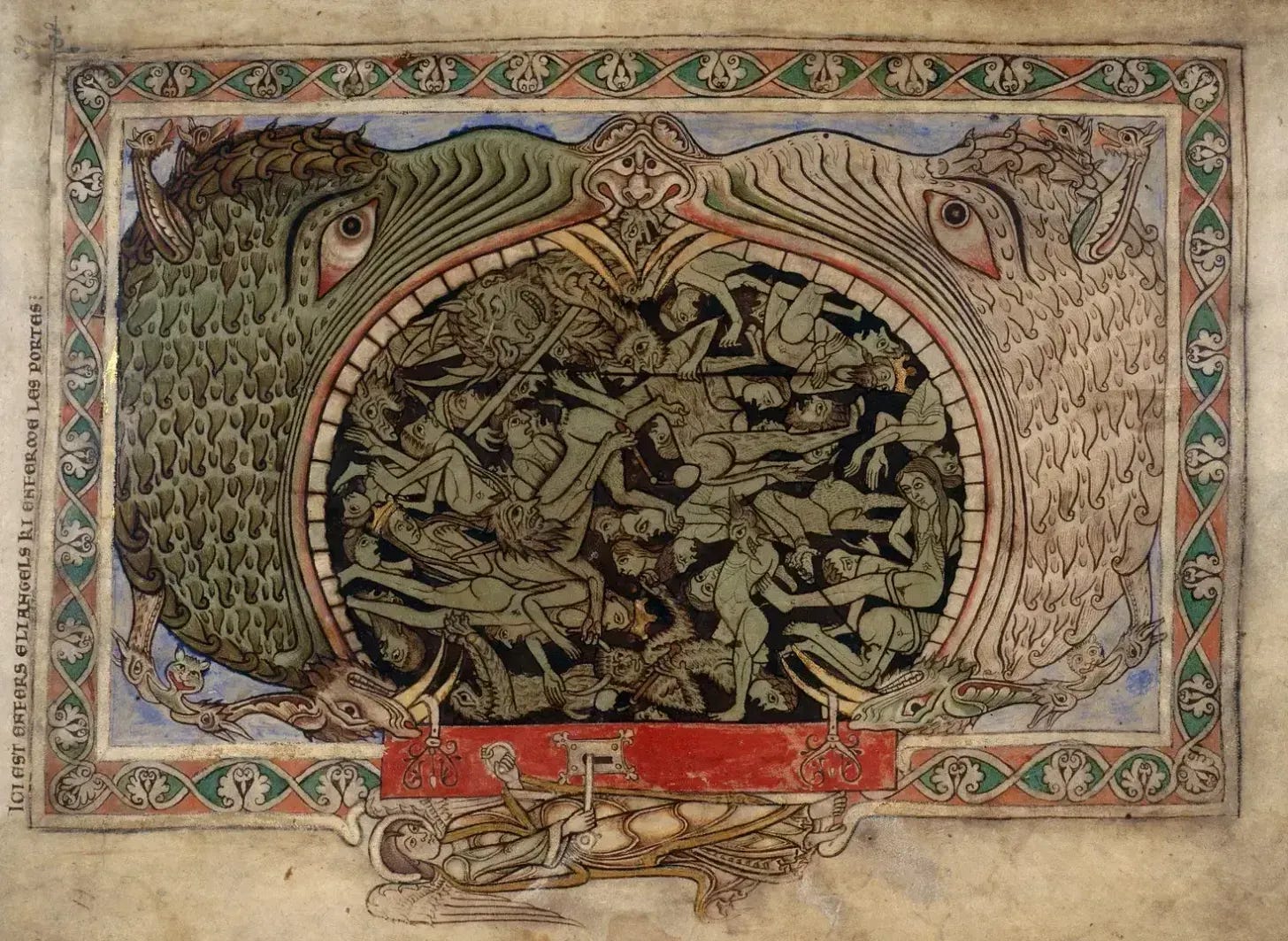
When the Normans sought to cement their rule over Britain after the Battle of Hastings in 1066, they relied heavily on ideological propaganda. The most famous example, the Bayeux Tapestry, presents a heavily sanitized narrative that favored William “the Conqueror.”1 A century later, the crown continued to gather power and took aim at the local Church, culminating in the 1170 murder of Archbishop Thomas Becket under Henry II. It was within this climate of elite consolidation that the aristocratically commissioned Winchester Psalter (c. 1150–1160) visually reinforced these rigid new hierarchies.
Among its most famous illuminations is the “Hellmouth,” which scholars interpret as a demonic vagina dentata swallowing souls into primeval darkness while an archangel locks the door. Paired with medieval cosmological maps ranking Heaven, Earth and Hell, this imagery confirms that to those in power, blackness, femininity and the earth were framed as chaotic forces to be demonized and subjugated.
This visual coding was matched by an audible one. In the medieval liturgical imagination, Satan was painted black and stripped of song. In The Play of Adam, a 12th-century church drama that helped stage the Christian cosmos, Satan enters “niger et deformis” (black and misshapen), unable to make music. The absence of melody marked his distance from divine order; blackness became both a visual and sonic shorthand for separation from grace.
Through these visual and theatrical performances, the Church taught that to exist outside divine light was to exist outside harmony itself. Centuries later, European empire gradually translated this theology into secular philosophy. During the “enlightenment”, the medieval framework of “divine light versus chaotic darkness” was reframed through scientific rationalism. The “light of God” became the “light of Reason,” placing white European men at the pinnacle of a global hierarchy while categorizing non-European peoples, lands and traditions as also dark, irrational and subject to mastery in the form of colonization, slavery and genocide.
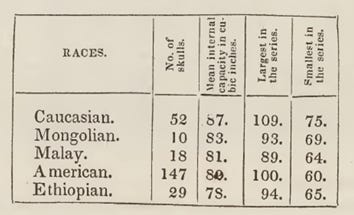
Rather than dismantling medieval theological dualism, modernity gave it nonsensical “scientific” authority and globalized it. These re-coded binaries culminated in 19th-century scientific racism and eugenics: pseudosciences engineered to rationalize violence that continue to shape modern institutions and algorithms today. It reflects how numbers can be used to quantify self-serving fiction in order to elaborately hide nothing more than the greed, lust, ignorance and vanity of lesser men. It takes blackness, darkness, African-ness, “others” them and relegates them to primitive “beginnings” found below, wrapped in disparaging or exoticizing tropes.
Kalipen in Sinti and Roma Culture
The fear of falling into nothingness within a system engineered to benefit the few at the expense of the many haunts us still today. And there are those of course who were never allowed to get up in the first place because we were put outside the system entirely.
A recent popular narrative among gadje (non-Roma) historians is that we, the Roma and Sinti, were India’s Untouchables who were so low we were cast out of the caste system to wander the world in abject poverty. As I will continue to write in pieces such as the history of medieval Roma and Sinti print and what we have created in our culture, these narratives of low caste have been crafted exclusively by non-Roma to hide their own ancestral history of impoverishment as medieval peasantry while obscuring the richness of our culture. Modern “gypsy science” and eugenics enclose our entire identity in a colonial understanding of Indian history where we have nothing, which easily facilitates perpetual, everyday looting of our culture. Meanwhile, many Roma and Sinti remember our deeper roads that reach through the trade networks of South Asia and across the waters to East Africa around what today is Somalia.
Even still, I am not immune to misinformation with a thousand-year head start. When I confront this history and injustice, I can feel my insides stained with that inherited shame and internalized racism, while a bright, blinding fantasy tempts me to believe that if I just perform enough "good deeds," I can somehow earn my way into the light. I hear echoes of my dark-skinned grandfather teaching my mother how to survive racism in the United States: by dressing impeccably, having money and keeping backup plans and a shotgun close, just in case.
Yet as a Gypsy, this internalized self-hatred for not being perfectly white is not my truth, it is just a gadjo dream I am experiencing. My truth is that darkness is not a curse or something to be understood in rigid doctrine, it is life and who we are. Quite literally, it’s what we call each other on the road: Calé in Spain, Kale in Wales, Kaale in Finland and so on. It is our kalipen: darkness or blackness.
Kalipen certainly refers to our skin tone and features, which have survived even the most racist and white supremacist eugenics, slavery and genocide. But its history predates modern race theory, and also the medieval European construction of the Hellmouth that sealed away the dark, earthly feminine.
We can find evidence of this in the Sanskrit, which Romani and Sinti language thread through. The ancient word Kāla (काल) holds concepts of destiny, death, the color black and darkness. It also refers to counting and calculations, or the perception of time itself. It represents both the dark, black or blue-black of time, the universe, origins and endings, but as well how we perceive, confuse and limit this as death-bound beings. When we speak of the wheels, the chakras in Sanskrit and Romungró (my language), we connect to the Kālachakra or “wheel of time". This is not the evil “dark one” of Robert Jordan’s Whee of Time. It is the experience of existence itself. It is what I know when I choose to close my eyes and sit in silence.
In playfully naming each other kali and kalo, we are stating the obvious, but we are also enacting the courage to do what so many fear to do—remember deep time. It is the confidence to remember before the borders were laid down, before the caste systems and before the hierarchy of a light heaven and dark hell were even formed. It is a memory through time. It is a word that does not create a map of hierarchy, but one of how to move, understand and embody in the world that holds the rich hues of the earth and vastness of the universe in our very skin.
Kalipen does not need a pedestal, a monument or center on a map. It’s simply what we call each other on the road. It holds a wide, decentralized memory, destiny and reality of South and Southwest Asia, of threads through Africa, of the night sky and of the brown earth that feeds us.
Kalipen carries no lineage of sin, rank or formal theology. Blackness in our own tongue is not something to be counted, assessed or centralized, but the fluid movement of time, memory and relation. Kalipen restores space and time between all people and things. It is what reminds me to resist owning anything with my own presenting whiteness and instead guard peace, allowing and deliberation. It has always lived beyond the eugenics map and acts as a living, felt choreonavigation. Kalipen does not co-opt the specific history or political reality of Black folks of the African diaspora, but orients in solidarity and reciprocity with them and all people of color, and away from the pale vampires of our lore that drain our life.
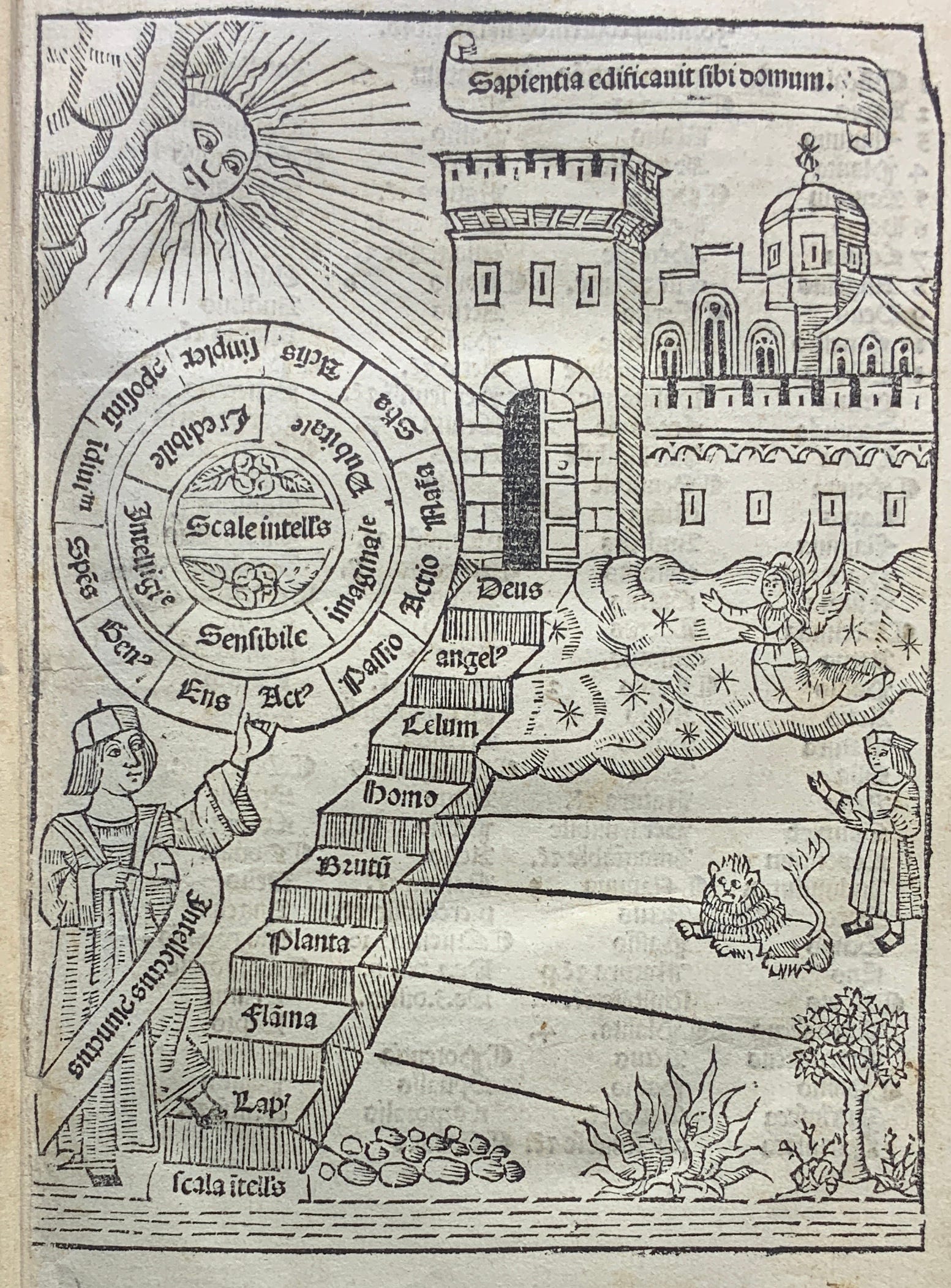
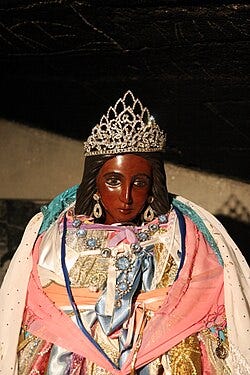
Many Sinti and Roma traditions, especially in France, traditionally honor Sara e Kali (Saint Sara the Black). She is not elevated onto a cathedral altar; at her shrine in Saintes-Maries-de-la-Mer, she arrives by sea alongside the Three Marys as a companion. Her dark face is not a warning of damnation, and she offers no ladder to climb. She stands as a living refutation of the Scala Intellectus: proof that the divine is always present. Unrecognized by church and empire, she will endure in the earth itself and medallions over our hearts if necessary. She dances with the Goddess Kālī, and we along with them.
An Artist’s Invitation
The age-old Roma and Sinti invitation towards art, performance and creative ingenuity call us to the way out. This teaching, passed down from my own family, reminds us that when the world collapses, we need to remember how to move. Fred Moten observed that blackness is not the opposite of light but the condition of its possibility. As I confront my own presenting whiteness in a world structured by colorism, the moments it fails me and privilege slips away become not a shadow to fear, but my truth—and liberation from a system of insanity.
Within systems of harm and their false maps, what if darkness is not the absence of knowing, but the fertile space where truth begins to breathe again? A way of remembering how to move and dream? What happens when we stop frantically chasing blinding light beams and instead let ourselves dance in the concert of colors?
A year ago on August 10th, when the war against journalism escalated to the murder of the Al Jazeera reporting team in Gaza, Emmylou held me a bit. When I worked at Fortune Media (of the Fortune500) at the end of the 2010s, my colleagues were already sounding the alarm that journalism was in peril—clickbait quotas, billionaire buyers of the press, the murder of truth-tellers like Jamal Khashoggi. A working journalist was killed for speaking the truth about a very rich man, and justice never came. Here, again, people were being cast into a fictional abyss to serve the interests of the few whose insecurity decided they were on top.
Emmylou’s planting of poverty in the red dirt of Mississippi stains my fall:
“One thing they don’t tell you
’Bout the blues when you got ‘em
You keep on falling
’Cause there ain’t no bottom
There ain’t no end.”
— Emmylou Harris, “Red Dirt Girl”
Sounding through African-American life for centuries, blue resists being swallowed in the abyss of the annals of agony. It chooses instead to see what’s actually there, eyes open or closed. If we take the mariner’s gaze upon the horizon of our torment, worlds of deep indigo, ethereal gray and churning yellows bring us through changes of weather, time and tides. Clairvoyance (clear-seeing) invites us to open our eyes inward and articulate landscapes.
What have we painted across the lives of others from what we have done, said and carried? Named colors are for race maps, bedroom accent walls and fascist ball caps. Unnamed colors unafraid of the dark can set us free. It is color beyond the rainbow—a world our ocean-evolved eyes were not built to see. It is all the blank space around our words, which is why poetry needs so much empty page.
As I remember looking out over the sea at 6:30am in Lahinch one year ago, my tears water the green dancing above the cliffs in the bay. I fall into myself, and in the drop, I see color—all the way through.
Thank you for reading. Gypsy Fires is entirely independent and supported by readers like you. Due to the theft of my home in NYC, ongoing litigation in the highest courts of New York with dangerous people and a year-long wait for immigration approval, I am currently legally unable to hold traditional employment, making this publication my primary sustenance.
Dr Lucy Worsley has done insightful documentaries for the BBC on “royal lies” and has a segment on the tapestry, which has come home to London for the first time in most likely 900 years.