
Dear Traveler,
Tell me of the roads you have taken. Sing for me the songs that you heard over fields along the way. Dance before the fire the journey that on ly you can take. Then we shall dream about where we will go next.
When I was born in a suburb of Cleveland, Ohio, off Lake Erie, my parents took me home to a house they had built almost entirely by hand, with the help of our family of course. The reasoning wasn’t just the American dream of owning land, something essential to survive in this settler state—especially if you are a traveler. My mother did not want to live or raise children in a house full of ghosts. In our family we didn’t necessarily have any problems with spirits hanging around, its just that it’s less work if you don’t have to clean up after them or tell them what to do all the time.
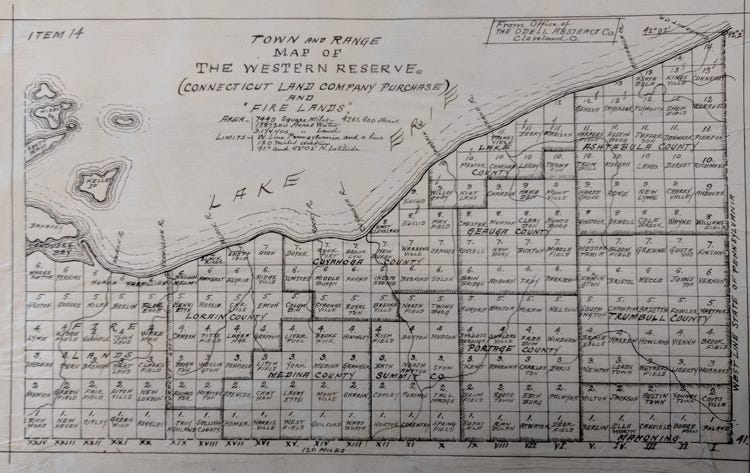
Our town of Independence was one of the original five by five mile townships created by the Western Reserve after the Treaty of Fort Industry forced native peoples from the land in 1805. On the 4th of July we celebrated the birth of our nation in the city’s public park, but in the forest that connected to our backyard, I listened to what the land had to say. Through waterfalls, pine groves, forest spirits and rusty abandoned farm tools, my sister and I received another history that told of the violence that really happened.
I would come to understand more about how our bodies hold the maps of the land better than any land survey when my mother and father would take us on the road. I would come to know the excitement of the old river towns of the Ohio Valley before we would go on to see the blue grasses of Kentucky, the smoky mountains of Tennessee and the red hills of Georgia. I learned to appreciate the culture of the local people, and to respect and learn from the native people where it was welcome. It was an extraordinary education that taught me that people may have borders, names and identities, but that’s not who they really are. To understand that, you need to watch how they move.
When the Romans set about to conquer their known world, they needed a way to understand the land that was less messy and more efficient for their goals than how humans normally understand it. They didn’t want to know much about who lived there, how they felt about the oldest tree in town or why funerals went this way and not that way through the village. They needed a cadastral map: a measured layout of the terrain that assessed all the valuable things within it. It wasn’t just Roman engineering and their military that created occupation within the Celts and other native peoples of Europe, North Africa and Southwest Asia, it was a calculated, unnatural understanding of the world that made it all possible. It was an evolution in our de-evolution as a species.
After the fall of the Empire in Rome, this expansive method of conquest would slumber for a thousand years, and re-emerge in new force in 1503 with the founding of the Casa de Contratación in Seville. This was a state-monopoly on New World map-making, and it was essential to the success of their colonization projects. How could they conquer lands if they couldn’t find them? This knowledge was the source of the Spanish Empire’s power, and to leak it was punishable by death.
After a century of war and plunder in the Americas, the French Empire expanded this tactic. They knew that while invasion and looting were lucrative, it was not as profitable as keeping power in order to create new extractive economies. To do this, Louis XIV of France and his court needed new tactics. One of them was to control culture and how people moved.
In 1661, Louis founded by royal decree the Parisian Académie Royale de Danse. France already had a guild that controlled music, dance and who was allowed to teach it, but in the Académie the ideal French courtly dancing, musical body could be under his control. This power was disseminated through traveling dancing masters—and not the “rogue” ones like those of my people—and their state-approved dance manuals. These were literal maps of how bodies should and shouldn’t move.
They would evangelize to the world his new elite, “absolutist” aesthetic that often dressed itself in the feathers, dyes and fabrics looted from the empire. His dancing masters would invent nonsensical patterns of movement that imitated and were designed to supplant more ancient systems of dance the empire was in regular contact with. They created something truly unnatural: a literal cadastral map of how bodies should move.
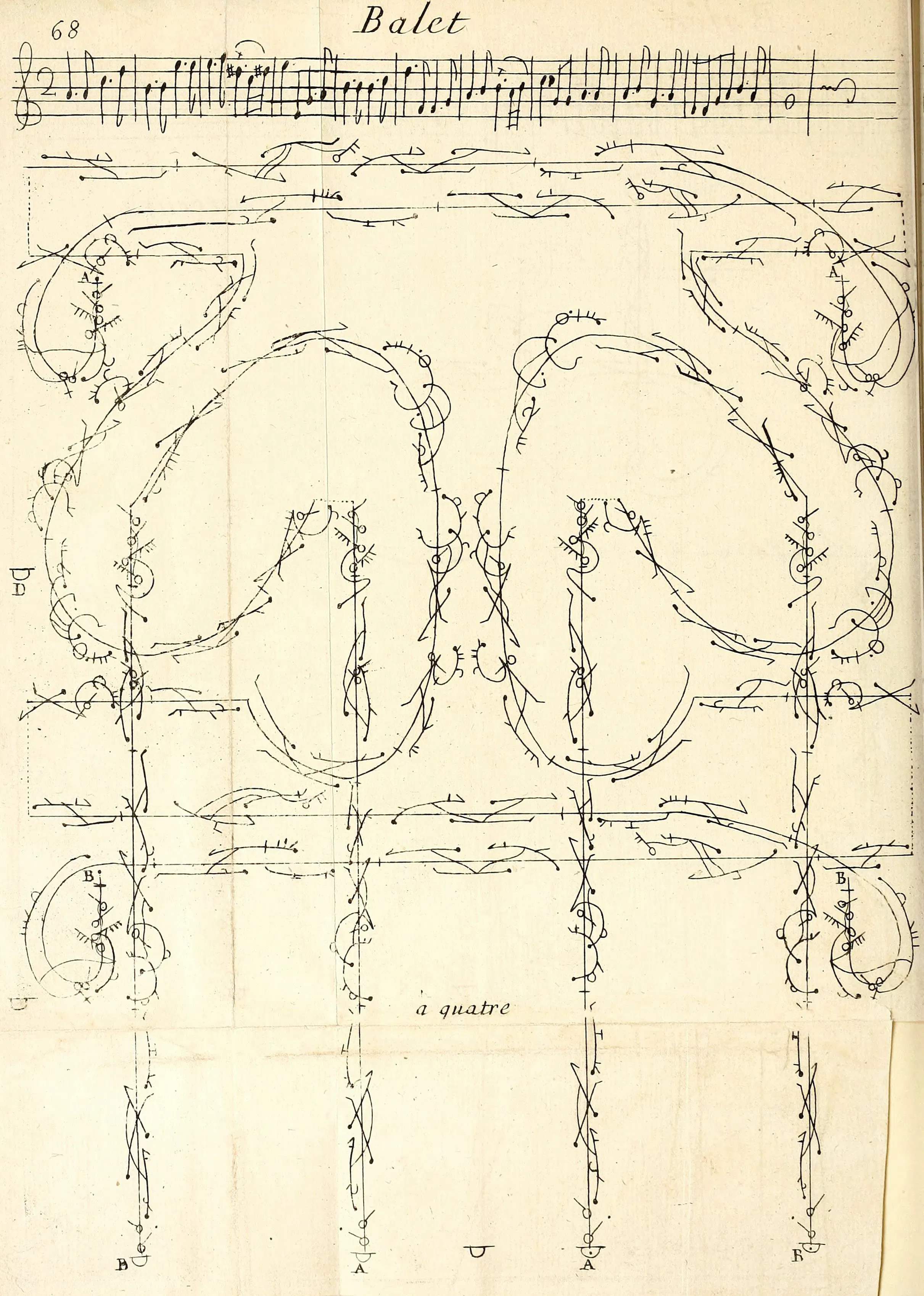
Today, we simply refer to this system as ballet. Its power wasn’t just in an aesthetic designed for absolute control, it was that it was made irresistible by its proximity to wealth and power. We find evidence of this influence all the way from Nova Scotia to Congo Square in New Orleans, from the crossroads of County Clare to the ports of Australia. And once something stays popular, when the promise of a life of beauty and pleasures is enticing long enough, it becomes its own gilded cage. We forget how we used to move, and then the only dream anyone has is the one a king in France had in a gigantic palace hundreds of years ago.
In time corsets have become six-pack abs. Ostentatious dresses that were the spectacle of the court (often costing women their lives when their numerous skirts brushed up against the candles on the floor and they burned alive) have become extreme, luxurious influencer diets that are just as perilous. Men have traded high heels and fashions of the court for “manosphere” luxury items they can show off online. The tastes may change, but the pattern of movement reveals the same person with the same desires.
As I move between the forest, the road and the courts of power today like so many Roma before me, I do my best not to be too bothered about the tastes of the gadje (non-Roma). For me and people like me who remember movement that’s older than any empire, the problem for us emerges when all movement is controlled.
Now here you might expect me to talk about how war, slavery and systems of power create new methods to control how people move. And I do write about that often. Tonight, as we sit by the fire, that’s not my main concern. The greatest danger for me, and for any moving person, isn’t that we all move the same. It’s when people forget to move at all.
There’s a basic principle here: to control land, build a cage like the Roman and Spanish empires did. To control people and get their consent to do it, create an irresistible aesthetic culture intimately intertwined with brutality and absolutism. To control thoughts and ideas, create a world where people no longer want to change their minds. For the empires of today, weapons, cages and consumer cultures aren’t the only weapons of war. It’s making people forget there was ever anything other than the prison they have been raised within. Make sure they cannot venture forth from their towns to meet people different from them, and make them afraid of the neighbor next door. Make sure they cannot move their bodies in ways that might disturb other people from their paralysis. Make sure their hearts can no longer feel the threads of time pulsing through the land. Take the burden of creativity, thought and emotions away entirely.
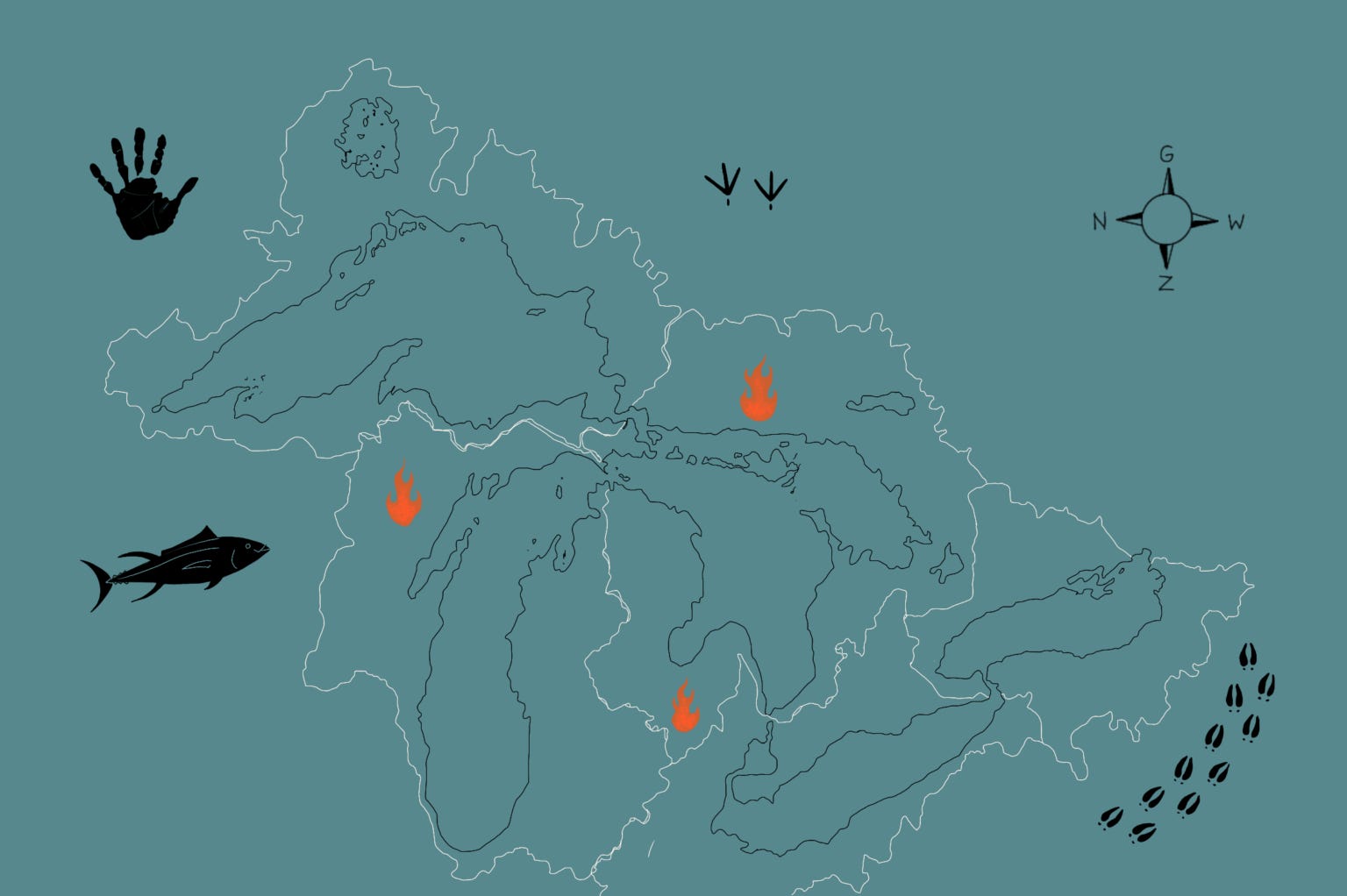
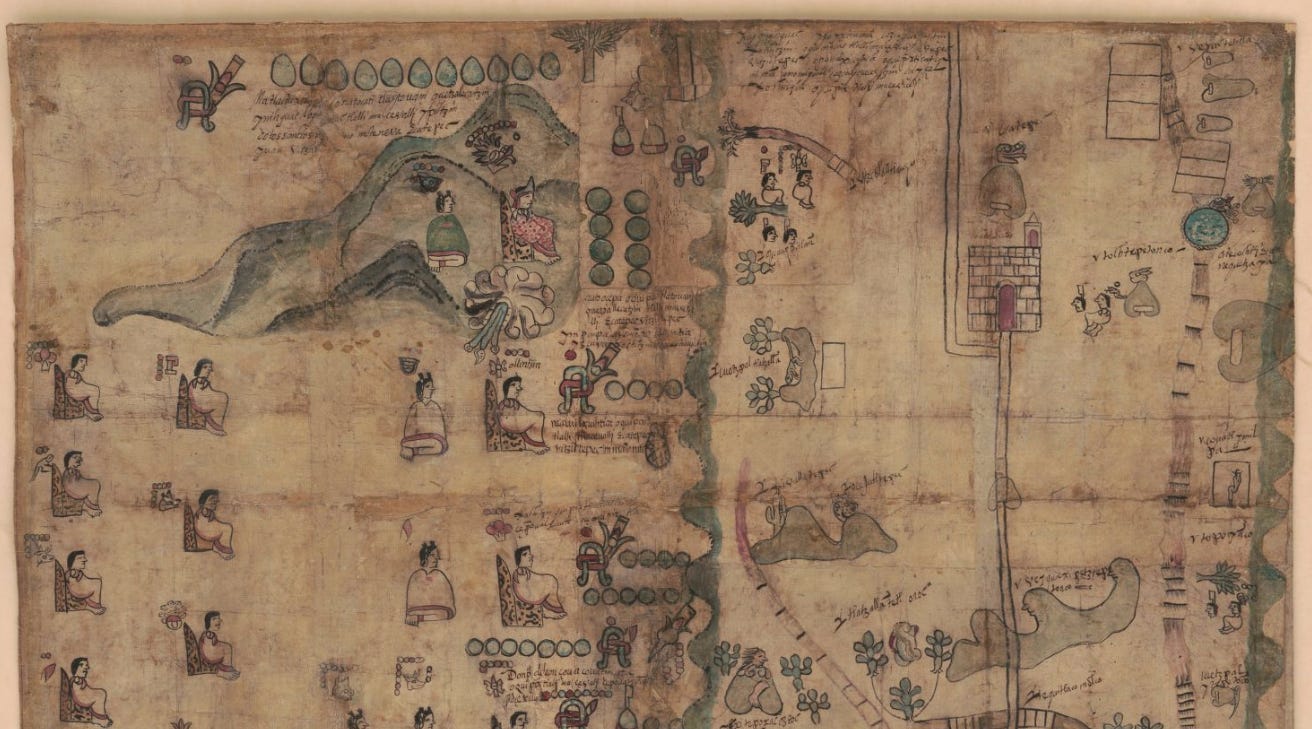
Indigenous countermapping refers to the practice of mapping real human relations to the land, to the natural world, to landmarks and to each other. These can be in the form of actual maps, but this can also take the shape of storytelling, music and, yes, even dance. When we learn to read the hidden history of the land and what happened there in our own bodies, we find a real map that can help us find our way home. We can discover as I did in the Fashion Institute of Technology Library in NYC that wooden shoes, slavery and forced labor were all connected and would change the way we walked and related to the land. We can discover as my friend Maria showed me that we don’t always have to learn tradition from a teacher—sometimes the teacher is in our DNA waiting for us to listen to it. It is the bear-hug from my grandmother that she learned because someone in our family before her learned that holding someone tight was survival.
At this Gypsy Fire, we read hidden histories in the body so that we might shape the world we want to live in by consciously being the people we want to be within it.
This Gypsy’s dream is a simple one. I wish to help you shatter through the cages of nothingness that are enclosing us as we speak, trapping us in empty-headed greed. I want to hear you sing to your newborns again through kitchen windows as I pass on by, welcoming them into a world of human play, sound and love. As I drive through fields I want to hear your people sing to the corn again, and when I return I’ll help fix a few things around town while we enjoy the harvest.
May your dreams tonight roam far beyond any map, and when you wake trust that your body will know how to take the next step to get there. I’m here to help you listen.
Lacho drom,
Russell
If you’d like to learn how to read the hidden histories the body carries and find your choreo-destiny, join us in the Timedancing Lab. The first course, Choreonavigating Crisis, begins June 21. Six lessons in movement for creativity in times of collapse, drawn from my family’s Bashaldo tradition and my doctoral research. Paid subscribers receive every lesson; founding members join the live sessions. Come move with us.
If you’d just like to sign up for the class (3 months of Substack included), here is the link: https://luma.com/choreonavigating.