


Dear Traveler,
Come rest. The fire has been waiting for you.
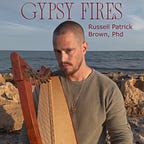
I’m Russell Patrick Brown, an American Bashaldo Gypsy—we have many names, don’t worry about it. I grew up on the same roads my family has traveled for generations between the Great Lakes into the Appalachian Mountains and down into Georgia. We’ve carried those who have come before through music, dance, ingenuity, survival and “knowing” the threads of human life through time.
For the last twenty years I’ve carried my tradition to Los Angeles on film, on the New York stage and on to Ireland for my PhD and now Spain, where I am getting to know the Gitanos, or Spanish Gypsies, better. I am in exile from my home at 18 Gay Street at the corner of Christopher Street in New York City—where I had the same landlord whose parents had rented a small cafe over a century ago at 20 Christopher to Romany Marie, who would become The Queen of the Greenwich Village Bohemians, and a tiny basement apartment at 14 Gay to Ruth McKenney, whose 1930s New Yorker sketches about her sister Eileen would eventually become Leonard Bernstein’s 1953 musical, Wonderful Town.
Gypsy Fires arrived after all my roads converged on one impossible conclusion: I am a Gypsy. I have resisted this label my entire life in every way I could manage: escape, shame, self-erasure, refusal, assimilation, fantasy, appropriation, lust, denial and abstraction (the Substack I opened last year). In mid-life, I am grateful to join the throngs of the mature, who are in fact tired of fighting what is true. I surrender.
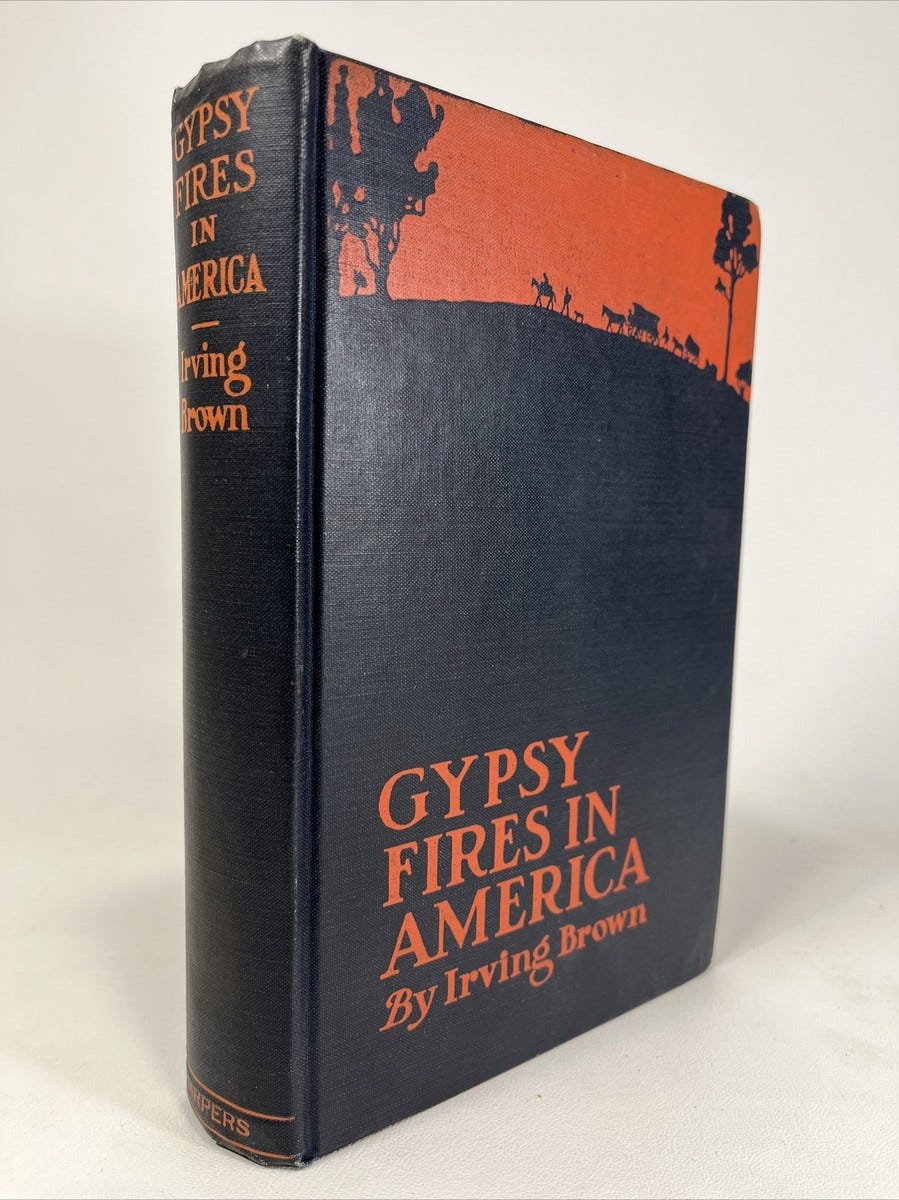
The most well-known book on American Gypsies, Gypsy Fires in America: A narrative of life among the Romanies of the United States and Canada, was written about families like mine passing through Southern Ohio. It is a complicated book full of real people portrayed as having the minds of children. Men were portrayed as con artists and women as lusty muses.
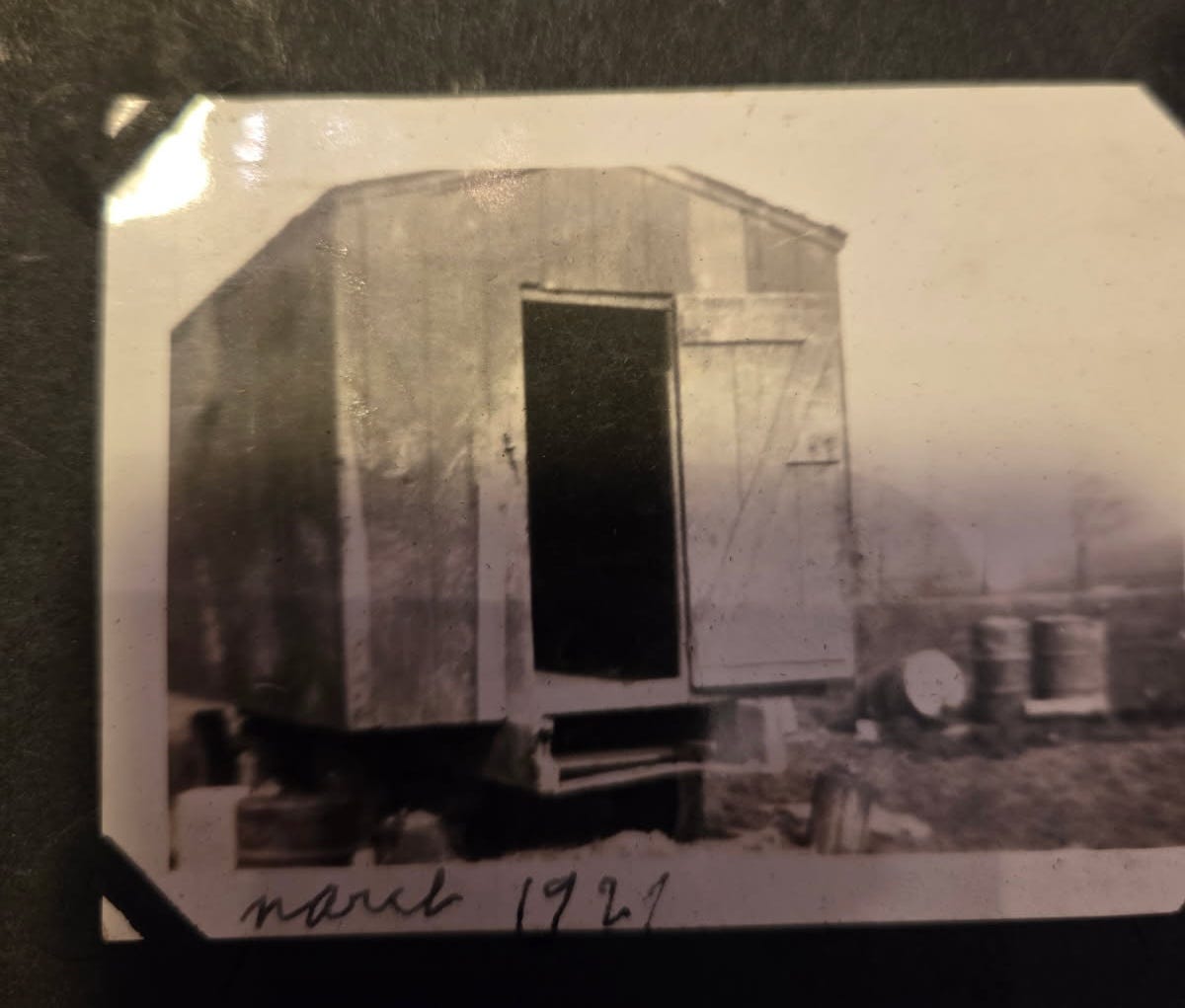
It was published three years after the photograph of my family’s Prohibition-era verda was taken in 1921—and one year after the Greenwich Village Bohemian movement collapsed as fascism rose in Europe. It is strange to think Irving Brown, the author of the book, might have met my great grandmother, who taught my mother, danced with my father and yelled at me until I was ten years old for putting my feet on the davenport. She left her playing cards out on the kitchen table for when someone would come through the back door for a reading.
I am opening this fire to you, stranger who I hope may become my friend, because you are the one who heard the call to sit by my side. I am the last of my family to carry this practice fully, and last year I had to go into exile from my home country (the USA) as well as my adopted country for almost twenty years, Ireland. In the arts and academia, our suppression and erasure grows fiercer by the day, despite the modest gains from fellow Roma. Global public health reports for the Roma and Sinti worsen by the year. There is talk of death camps returning. From the gadje (non-Roma) perspective, things look bad.
From my perspective as a Gypsy, I do not wait or depend upon anyone saving me, even when help comes. I know that life is not led by self-actualization, liberation, trauma or manifesting what we want, but by impact. It is in our myriad collisions that we face disruption and—if we can—find discovery. It is the countless great and small impacts of our lives that we come to know ourselves, each other and the world around us better—in this time and all times. My road may have ended somewhere I did not expect, but I know that I have only just begun a deeper dance with time itself.
Here you’ll find guidance to help you re-approach what you know, what you didn’t know and what you didn’t know you already knew about Gypsy life, which has inspired the world for centuries. As the very old war on life slithers, mutates, bombs and engulfs more and more of what we love and what we need to survive, I hope that you find rest, repair and inspiration for the road ahead. I also hope that your own memory is awakened; we must remember every road through human history that we can. Your truth is needed.
How to Gather Around This Fire
To support this work and help a freelance creator sustain an exile’s road, I’ve structured this space into pathways that respect both your journey and my craft:
Free Subscribers (Weekly Tuesday Letters & Podcasts): You will receive weekly dispatches of narrative history and embodied insight (Gypsy Fires); and a couple times a month the foundational somatic training frameworks (Timedancing Lab).
Paid Subscribers (Monthly or Annual): You gain full entry into The Micro-Dance School, featuring streamable audio loops, rhythmic tapping tracks, movement frameworks and guided meditation and Cohort Priority with a private subscriber chat and 24-hour early enrollment for all live virtual and in-person workshops.
Fire Keepers (Founding Members): An intimate, 1-on-1 virtual session to build a personalized movement framework tailored to your body, followed by an annual harp blessing.
There is also a private space, the Verda, held free for Romani and Sinti readers, by introduction. The fire is a meeting place and meeting places must be open; the verda is the home, and homes are kept private. If you are Romani or Sinti and would like to be welcomed in, please write to me.
I’ll finish today with our message as a people, as recorded by Nico Rost in Paris, May 1963, when he interviewed the President of the World Roma Organization, Ionel Rotaru, His Highness Vaida Voevod III. My new friend Vicente Lehnsherr translated and shared it me:
“We are the symbols of a world without borders, a free world, where weapons will be banned, where everyone can move freely from the steppes of Central Asia to the Atlantic coast, from the plateaus of southern Africa to the forests of Finland.”
Stay. Please introduce yourself. Share a song. Remember what it is to be human.
Through snaps, claps, taps, slaps and stomps, we’ll continue.
Lacho drom,
Russell


