



Dear Traveler,
Thank you to so many of you who signed up for Gypsy Fires this last week. As a Rom and an academic, I am writing for more of you than I ever thought I would be, and I take this very seriously. Not only is your time and your thinking-space precious, but writing about my culture, my identity and my life in a way that honors all those who came before, share Romanipen with me now and will come after me is a tremendous responsibility. But on this I do not stand alone nor do I have to re-invent the chakra (“wheel” in our language).
In the last year I have been exploring Substack, Alex Carberry came into my feed as a powerful figure of thought leadership, insight and gentle wisdom. His piece, Están Fritos, brings a highly critical yet honest perspective on the entanglements of market, desire and creole lived experience that assaulted my own grandiose visions of liberating futurisms; we do not have to keep producing our own salvation in a system that will never allow it but knows how to capitalize our hopes, dreams and resistance. But what then?
Alex also does live conversation on Substack, and his most recent discussion with Meticulous Prime on the importance of understanding Ghana in the great colonial project helps with another piece of the puzzle of woe we find ourselves in. It is Alex’s systems thinking and pattern recognition that drove me to ask if he would be willing to do a live session with me, and thankfully he said yes not only to me but to a focus on Romani Journeys Through Time with a transcontinental perspective.
The full recording is available above with links to podcast versions.
Rethinking How We Remember
The doorway of this conversation I think, is the observation that Alex makes in the clip below. We have choices about how we remember ourselves, and it is a choice to put the most violent men found in history in the center of our history classes. It’s a decision we can change.
But if you’re here, you might already be aware of what oppressors do and what our harmful, sacrificial economic system does and will keep doing. What you might not be aware of is how the folk, the people, remember these mass murderers and highway robberies, as my grandmother called it.
Genocide as Theft, Not Just Hatred
Before you might listen, I want to add emphasis to a critically important point: genocides and racism are never, ever just about supremacy or prejudice. They are about stealing—and then calling the victimized the thieves who deserve the gas chamber.
“Highway robbery” is a memory of a time in England (1600-1800) when the privatization of the commons drove people into dire poverty and desperation. Their social contract was being most cruelly re-written in real time, and they were blamed for it. The real thieves, of course, were the capitalists using gibbet cages, transportation and slavery to make enormous profits while they decimated ecologies, including deforesting most of Ireland and many other lands. But this is not what is taught in school.
Race-fueled genocides and ethnic cleansing are about stealing, and more importantly, using hatred, ignorance and apathy to hide that theft is what is happening. This happens because if everyone realized that genocides today are still about stealing from victims and then blaming the oppressed for it, the conversation would have to change and maybe, just maybe, we all would realize what has been taken from us and what it is used for.
Our conversation though, is more about the memory of these events. For the Roma and Sinti, I believe, it is our long recall of ourselves and the world as travelers that helps keep us tied to our humanity while others lose their humanity to protect stories of borders, labels and empires. This is part of timedancing and that we are timedancers—khelašia e cejteske.
The Disappearing Record of the Samudaripen
The samudaripen of the Sinti and Roma in WWII, the Holocaust, is commemorated in many countries August 2nd-3rd, which is when in 1944, 2,897 Roma, mostly women, children and elderly people, were killed in the Gypsy family camp (Zigeunerfamilienlager) at the Auschwitz concentration camp. Although it has taken 80 years, more people are aware of the Sinti and Roma genocide today than I ever thought they would be. They are still given, however, an incomplete picture.
Not only did the genocide fail to begin to be recognized until 40 years after WWII ended, the numbers of those murdered are underreported. Our own people 20 years after counted some 4 million dead—and remember they would know best as most Roma and Sinti were shot on sight and not counted by tattoo and IBM punchcard. Then that has fallen to 2 million. Then ten years ago 500,000 and then now I’m seeing 250,000.
The need for the system to keep lying is plainly evidenced as well when BMW blocked a memorial to slaves from the Dachau concentration camp who died in their factory in Munich. BMW has never had to pay reparations for that slave labor, and their business today still stands upon those profits (think of all the companies today profiting from genocide and how rich they are getting while many slide into poverty or disappear entirely). Or how the German government wants to remove the Memorial to The Sinti and Roma of Europe Murdered Under National Socialism for public transport construction. The memorial sits in a park. And somehow they need to tear this site apart for the public good.
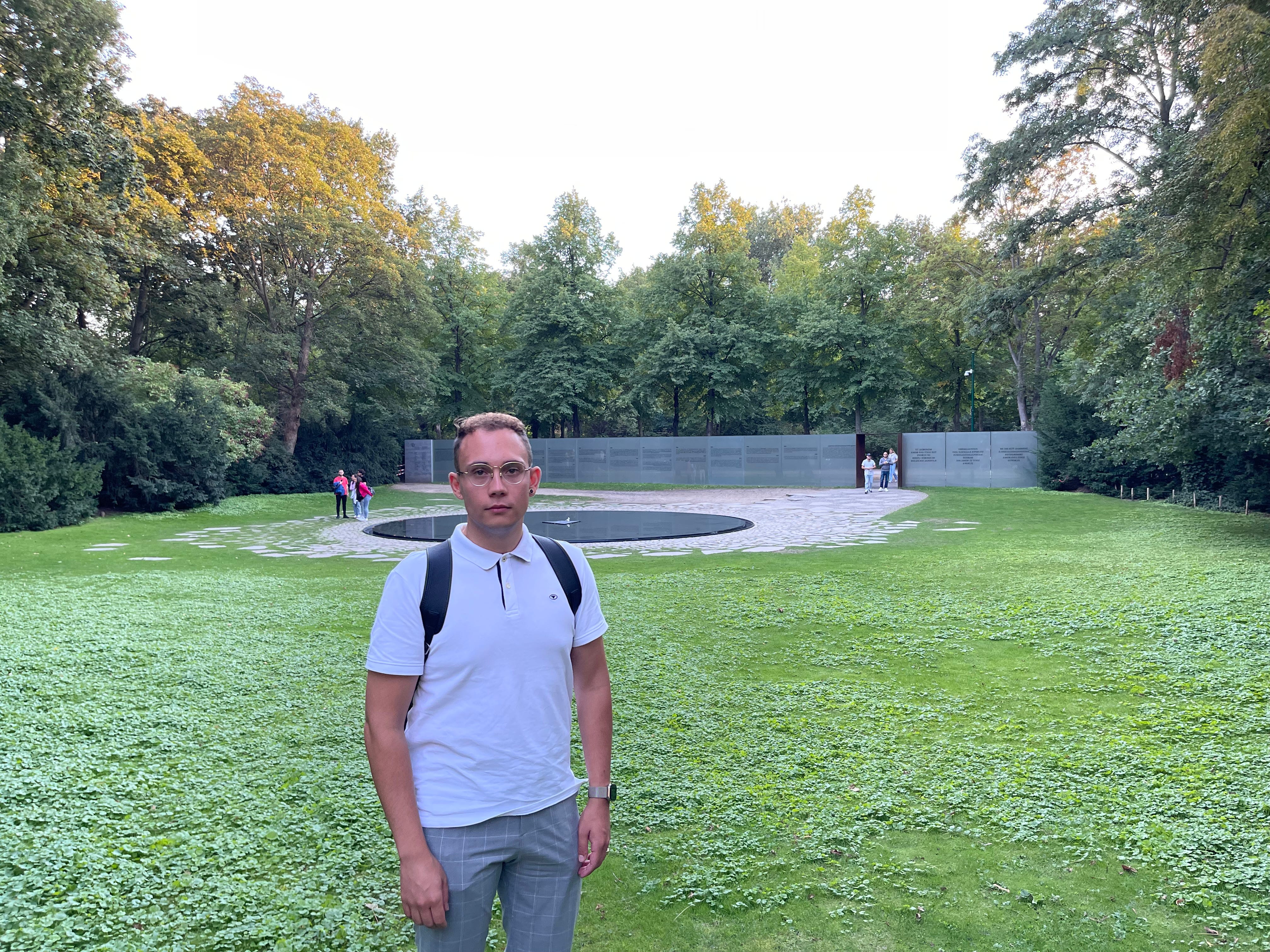
All this lying however, still hides the deepest lie. The one that Alex mentioned from Martin Luther, that we ought to “call a thing what it really is.” And that’s theft.
Not only did the Nazis and their collaborators in many countries target Roma and Sinti families of all economic classes, they did so to steal what wealth they had. To steal their jobs. Their trades. Their traditions. They did it re-write centuries of European history which includes the Roma and Sinti bringing print to Germany decades before people claim Gutenberg invented the printing press. They wished to settle the score, and this would have enduring implications far beyond Europe, especially in the world of the arts.
As I highlight in the clip below, the idea of the wandering artist and free-spirit was inspired by Roma and Sinti trade routes, practices, ingenuity and embodied knowledge.
The most famous, well-regarded and beloved American musical of all time is undoubtedly Gypsy, and that name is no accident—nor is it an accident the producers of the recent Broadway revival declined to educate the public on the history of that word even as academics and journalists discussed representations of race within the show and the broader theater world. I will have a chapter out with Routledge next year further in depth on these topics with a focus on what I call “American Bohemianism”.
Cultural Appropriation & Modern Erasure
Among the fallouts of the Holocaust was a large scale deletion of the public memory of our long-standing contributions and development within European culture. It is the erasure that allowed the Judson Dance Movement in New York City and somatic movements from Europe to Australia to claim to discover “movement analysis” (Laban), “human-to-human” transmission (Forti), Body-Mind Centering (Cohen) and other nonsensical frameworks intended to cash in on what families like mine have always known and claim exclusive ownership of it.
Genocide gave the permission slip to Rudolf Laban, who worked in the Nazi party, and many other artists to claim to discover, copyright and own what was already widely known for thousands of years in dance communities European and American empires were actively murdering and stealing from.
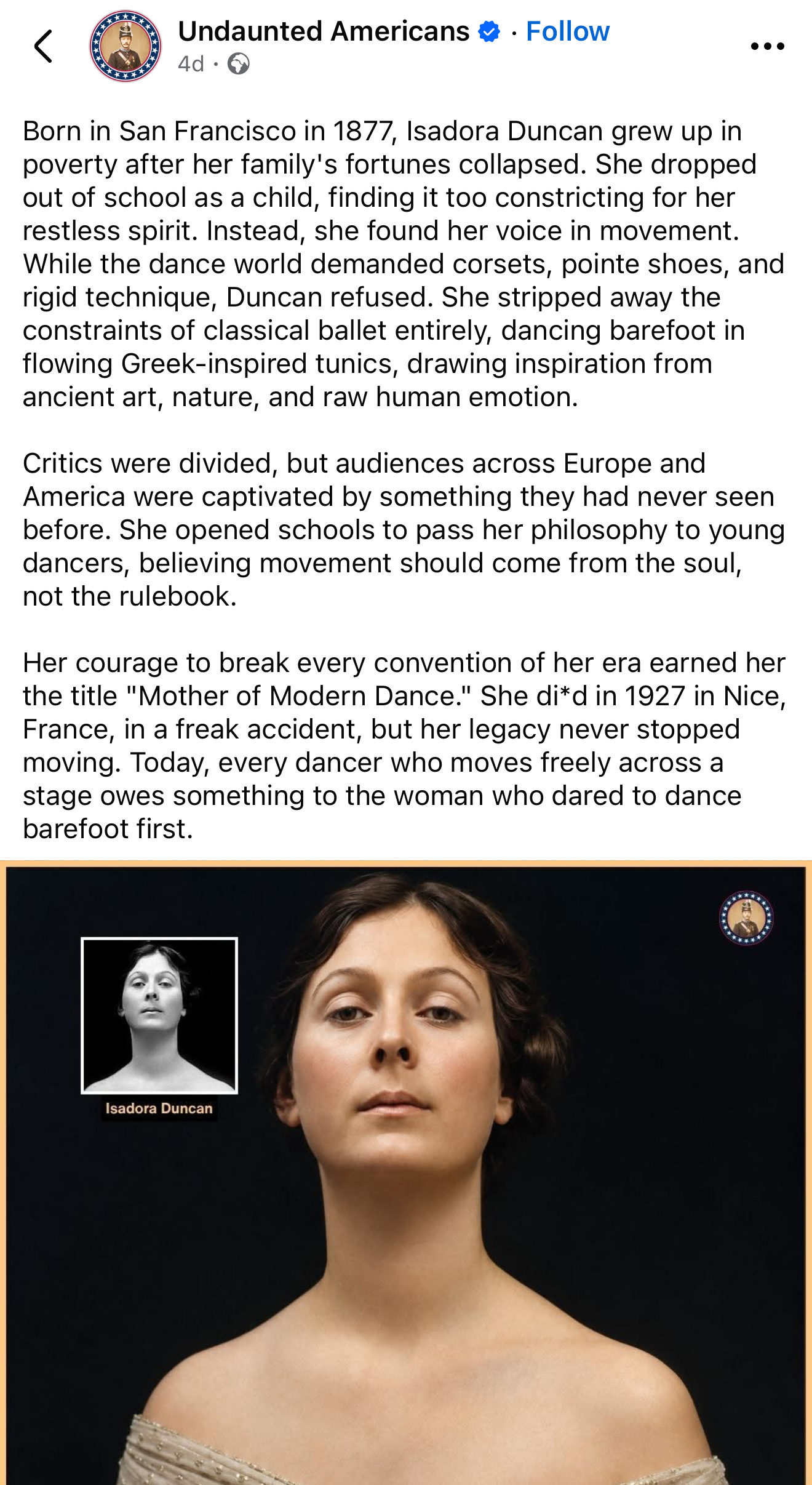
Dance always keeps a record of what happened, and it’s why in my conversation with Alex I keep returning to it. It’s why I opened Gypsy Fires: not to call you or anyone thieves, but to help you see what was stolen from you because occupation is a disease, and it doesn’t just spread through war—but in plain sight.
If you have any thoughts or feedback, please do share in the comments or send me an email. I’m eager to hear what you think.
Lacho drom,
Russell


